Garage door seal: block the draughts, dust and pests at the gap
See daylight around your closed door? That gap lets in draughts, dust, water, leaves and pests. A garage door seal closes it. Seal kits from $260, fitted in an afternoon.
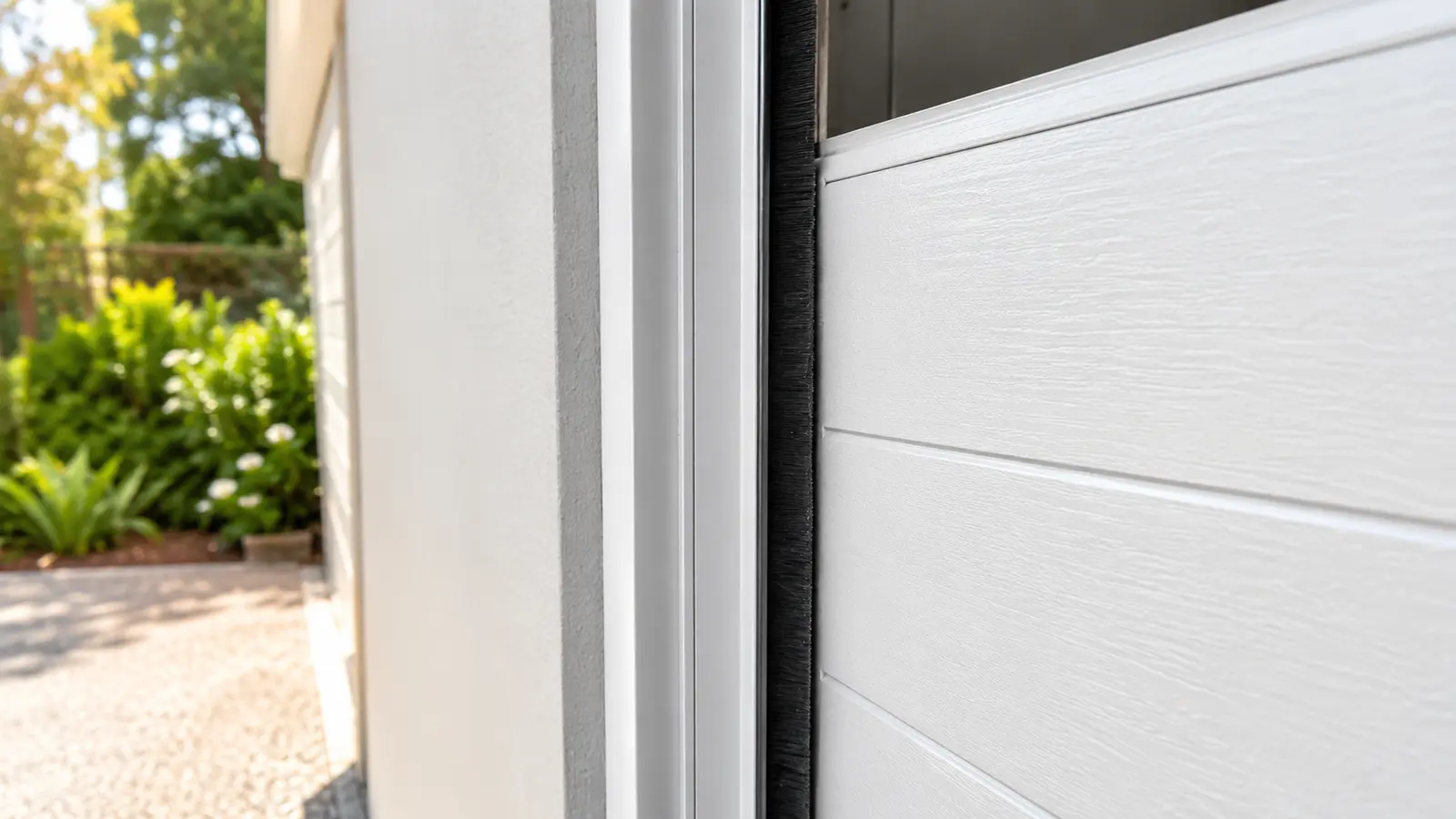
Look along the bottom and sides of a closed garage door. See daylight? That gap is letting in everything you don’t want. A garage door seal closes it. Fit one and you stop the draughts, the dust, the water after a storm, the leaves, and the mice that follow them in.
The door itself is rarely the problem. The gaps around it are. Seal the gaps and the garage stays cleaner, drier and a fair bit more comfortable.
What a garage door seal does
A seal is a strip of rubber, vinyl or brush that fills the gap between the door and the frame or floor. It flexes as the door moves, so the gap stays closed whether the door is up or down.
Garages are built with clearance around the door so it can run freely. That clearance is a gap. Wind pushes draughts through it. Rain runs under it. Dust, grit and dry leaves blow in. Spiders, cockroaches and mice treat it as a front door.
A seal blocks the lot at the source. Heat and cold sneak through those same gaps too, so sealing them helps the garage hold its temperature.
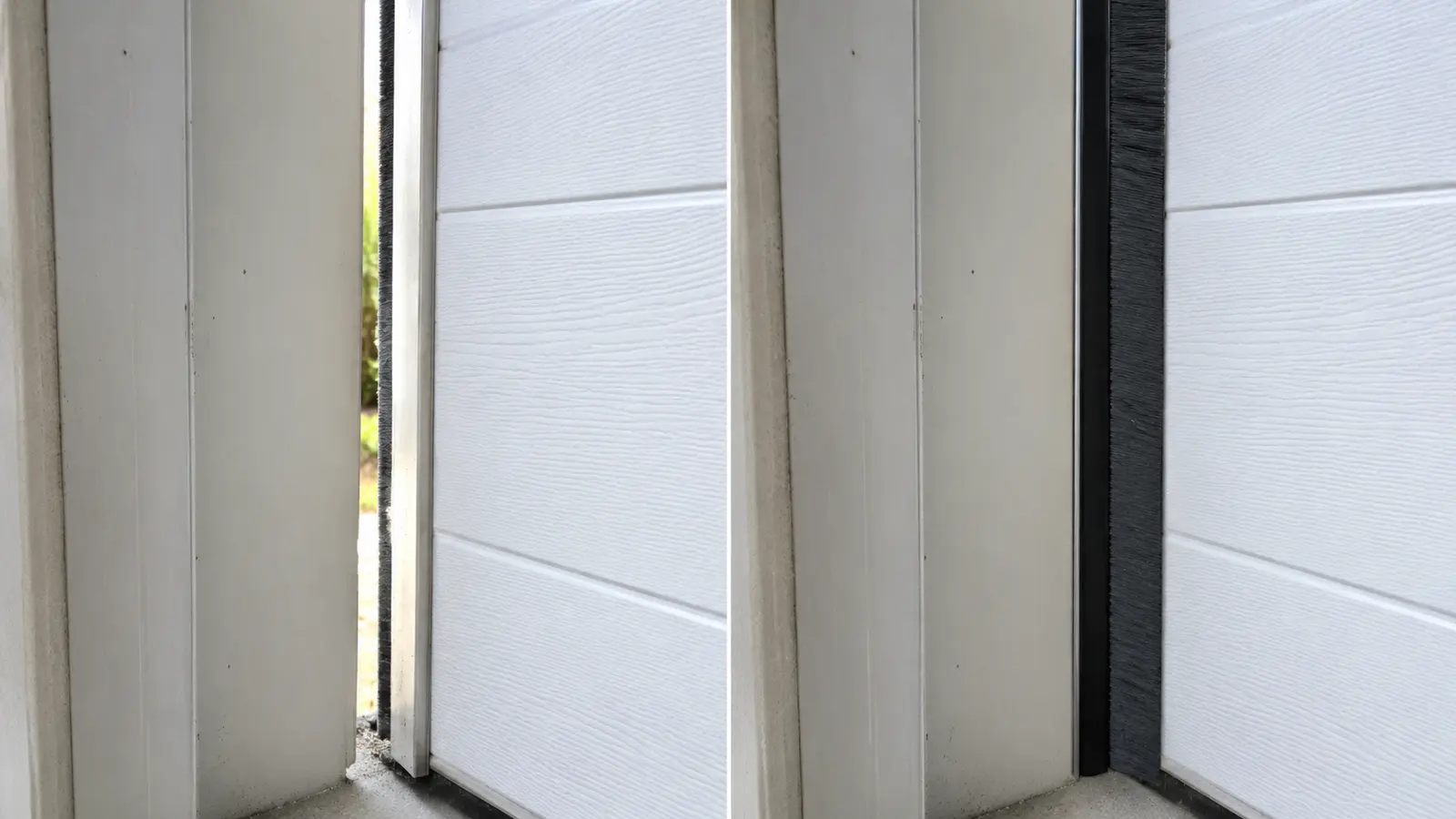
The before-and-after says it plainly. The same gap, open and letting the weather in, then closed by a brush seal down the side.
One thing to be clear on. Seals close the gaps around the door. Insulation panels work on the door’s flat surface to slow heat coming through the metal. Different jobs. Many people do both, and we cover the panel side over on our garage door insulation page.
Why a small gap causes big problems
A gap that looks like nothing does a surprising amount of damage over a year. It is open every hour of every day, in every kind of weather, so the small stuff adds up.
Water is the worst of it. A run of rain pushes under the door and across the floor, and anything sitting low gets wet. Cardboard boxes sag, tools rust, and a damp slab takes days to dry. Dust and grit blow in on the wind and settle on everything you store. Leaves pile up in the corners. And the warm, sheltered gap is exactly what spiders, cockroaches and mice are looking for on a cold night.
Then there is comfort. Wind drives straight through an open edge, so the garage never holds a steady temperature no matter what else you do to it. Close the gap and all of those problems stop at the door instead of inside the room.
Signs your door needs a seal
You usually do not have to go looking. The clues turn up inside the garage.
- Daylight under or beside the door when it is shut. If light gets through, so does everything else.
- Dust and leaves that keep coming back no matter how often you sweep.
- A puddle or damp patch near the door after rain.
- A cold draught you can feel along the floor on a windy day.
- Pests such as spiders, cockroaches or mice turning up where they should not.
Any one of these means the gap is open. The fix is the same in every case. Close the gap with the right seal and the problem stops at the door instead of ending up in the room.
Types of garage door seal
Not every gap is the same, so there’s a seal for each one. Here’s what each does and when to reach for it.
Bottom seal
The workhorse. A garage door bottom seal runs along the base of the door and presses onto the floor when it shuts. It’s the gap that lets in the most water, dust and crawling pests, so it’s the first one most people fix. A bottom seal also copes with a slightly uneven floor, filling the dips a rigid door can’t.
Brush seal
A garage door brush seal is a dense strip of bristles set in an aluminium or PVC carrier. The bristles bend to fit, which makes a brush seal great for sealing around the sides of a roller or sectional door where a stiff rubber strip would catch. It stops draughts, leaves and grit while still letting the door run smoothly. If your door has gappy sides, this is usually the answer.
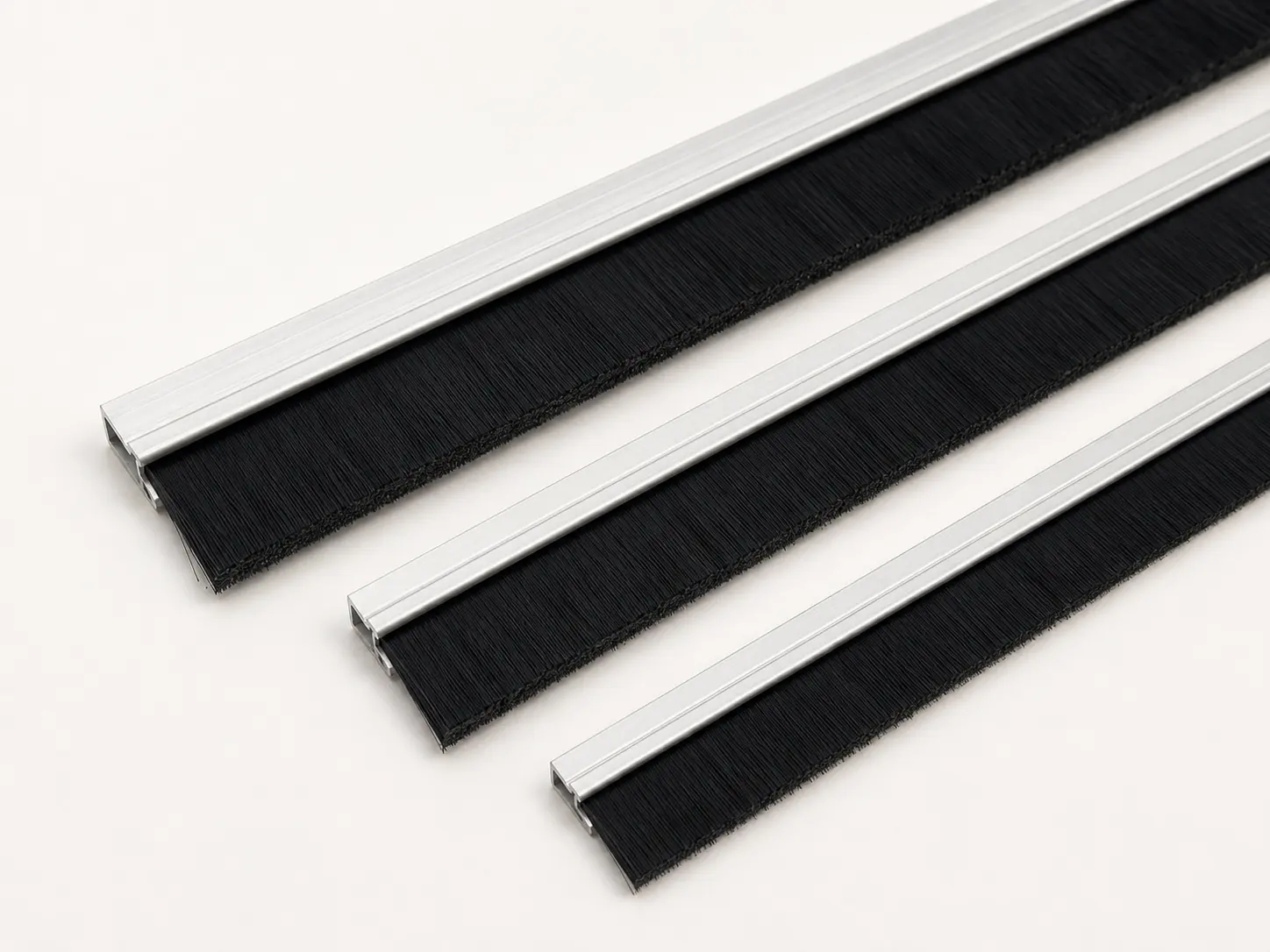
KoolDoor’s seal kits use brush seals in slim aluminium carriers, made to close the side gaps that let the weather in.
Perimeter and weather seal
A perimeter or weather seal runs up the sides and across the top, where the door meets the frame. It blocks the wind-driven draughts and rain that get past the bottom seal. On an exposed wall that cops the weather, this is the one that earns its keep.
Threshold seal
A threshold seal fixes to the floor rather than the door. It forms a low ramp the door closes against, which is handy when the driveway slopes water back towards the garage. Pair it with a bottom seal for a tight finish on a difficult floor.
How to choose the right seal
Two things decide it. Your door type and the size of the gap.
- Sectional door (folds up in panels). A bottom seal plus side and top weather seals covers it. Brush seals suit the sides well.
- Roller door (rolls into a drum). Brush seals are the go for the sides and top, since they flex with the curtain. Add a bottom seal at the base.
- Tilt door (one solid panel). Treat it like a sectional. Bottom seal, then perimeter seals around the frame.
Now measure the gap. Brush seals are built for small, even gaps, the kind most doors have along the sides. A wide or badly uneven gap, or a dodgy floor, needs a deeper bottom seal or a threshold seal to bridge it instead. Measure the door width too, so you order enough length in one go.
Stuck on which door you’ve got? Tell us and we’ll point you to the right seal before you buy.
How to fit a garage door seal
This is a weekend job, not a tradie job. Most seals go on with a tape measure, a knife or hacksaw, and a drill or some strong adhesive, depending on the type.
- Measure and cut. Measure the door, then cut the seal to length. Add a touch extra and trim back rather than cutting short.
- Clean the surface. Wipe the bottom rail or frame so the seal grips. Grit and grease stop it sitting flat.
- Fit it. A bottom seal slides into the channel on the base of the door. Brush and weather seals screw or stick along the frame. Carrier strips are cut to length and fixed with screws.
- Test the door. Run it up and down. The seal should touch all the way along with no gaps and no dragging. Adjust if a section sits proud.
Take your time on the measure and the rest follows. Get it level and the door does the work every time it closes.
Seals or insulation, or both?
This is the question we hear most, so here is the short version. They fix different problems.
A seal closes the gaps around the edge of the door. That is where draughts, water, dust and pests get in. An insulation panel goes on the flat face of the door and slows the heat that radiates through the bare metal. One handles the edges, the other handles the surface.
If your main gripe is dust, leaves, a draught or a puddle, start with seals. If the garage cooks in summer and chills in winter, the panels do the heavy lifting, and our garage door insulation guide covers them. For a garage you use all year, most people end up doing both, and the two work happily together.
Shop the KoolDoor seal range
Seal kits, sized to your door, with everything you need to close the gaps in an afternoon.
| Seal kit | Suits | Price |
|---|---|---|
| Single garage door seal | A single garage door | $260 |
| Standard garage door seals | Most standard doors | $340 |
| Double garage door seal | A double garage door | $340 |
Kits start at $260. All prices include GST, plus delivery, calculated at checkout.
Built for here, backed here
KoolDoor seals are built to suit Australian doors and Australian weather. Every kit is cut to suit your door, so you are buying from a specialist rather than a reseller passing on a generic part.
Common questions
What does a garage door seal actually stop?
Draughts, dust, water, leaves and pests. The gap around a closed door lets all of it in. A seal fills the gap so the garage stays cleaner, drier and easier to keep comfortable. Closing those gaps also helps the space hold its temperature.
What’s the difference between a brush seal and a rubber seal?
A garage door brush seal uses dense bristles that bend to fit, so it suits the sides of a roller or sectional door and lets the door run smoothly. A rubber bottom seal presses flat against the floor and handles water and an uneven surface better. Many doors use both, in different spots.
Do I need a seal if I’ve already insulated the door?
They do separate jobs. Insulation panels slow heat through the door’s surface. Seals close the gaps around the door where draughts, water and pests get in. For a garage you’ll actually use year round, doing both gives the best result.
Can I fit a garage door seal myself?
Yes. It’s a weekend job with a tape measure, a knife or hacksaw, and a drill or adhesive. Measure the door, cut the seal to length, fix it on, then run the door to check it touches all the way along.
What size gap do brush seals suit?
Brush seals are made for small, even gaps, which is what most doors have along the sides. If you have a wide or very uneven gap, a deeper bottom seal or a threshold seal is the better bridge. Measure the gap before you order and tell us if you are unsure.
How much does a garage door seal cost?
KoolDoor seal kits start at $260 for a single door, with double-door kits at $340. Prices include GST, plus delivery worked out at checkout.
Seal the gaps, sort the garage
Block the draughts, the dust and the uninvited pests. Yours to fit in an afternoon.
Shop seal kits · Upgrade with insulation panels
Not sure which seal suits your door? Call us on 0460 789 469.
Block the draughts, dust and pests
Shop garage door seals shipped Australia-wide, or get a fixed-price install quote in 60 seconds.