Garage door insulation: a cooler garage and a room you'll actually use
Your garage door is the biggest uninsulated surface on the house. Insulate it and the room stays up to 20°C cooler in summer and warmer in winter. Fit a kit yourself in an afternoon, or have us install it.
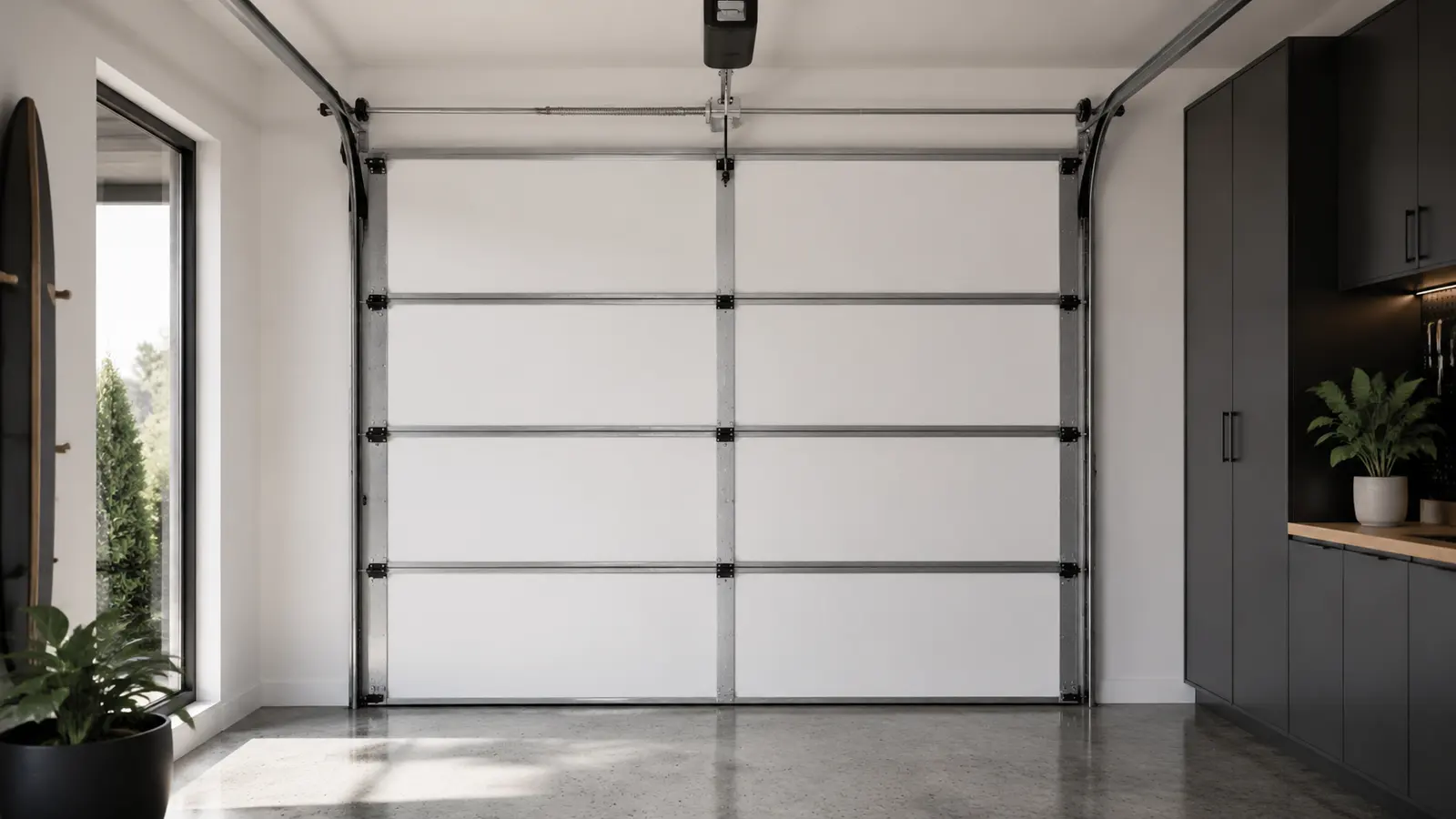
Your garage door is the biggest piece of bare metal on the house. It soaks up the sun all day and dumps that heat straight into the room. Garage door insulation puts a stop to it. Line the inside of the door and the space stays cooler in summer, warmer in winter, and usable all year.
That is the whole point. Not a hotter shed. A room you can park in, work in, or train in without sweating through it.
KoolDoor makes that switch simple. Fit a DIY kit yourself in an afternoon, or have our team measure and install it for you. Either way you get the same premium, fire-rated panels and the same 10-year guarantee.
What garage door insulation actually is
KoolDoor panels are closed-cell PIR foam (also called polyiso) with a tough white facing on both sides. You fit them to the inside of the door, panel by panel, so they sit flush between the door’s rails.
PIR is the same family of foam used in commercial roofing and cold rooms. It is rigid, light, and fire-resistant. That last part matters in a garage, where flimsy polystyrene has no place. Ours is built for Australian doors and Australian heat.
Two things happen once the panels are on. The facing reflects radiant heat back the way it came. The foam core slows the heat that tries to pass through. Together they keep the door’s heat out of your room in summer, and hold your warmth in over winter.
Why your garage cooks in summer and freezes in winter
A single uninsulated garage door is often the largest unprotected surface on the whole house. It is thin steel, painted dark or mid-tone, facing the weather with nothing behind it.
In summer that steel can climb past 50°C by early afternoon. It then radiates that heat down into the room long after the sun has moved. Park a hot car inside and you add to it. By 3pm the garage is an oven, and anything you wanted to do out there can wait until autumn.
Winter flips the problem. The same bare door lets your warmth leak straight out, and draughts around the edges make it worse. The space turns cold and damp, and the room you paid for sits empty half the year.
Insulating the door treats the cause, not the symptom. You are fixing the biggest gap in the room’s defences, which is why the change is so easy to feel.
What you get out of it
- Up to 20°C cooler. That metal door is the hottest surface in the room. Line it and the heat stops pouring in off it.
- Warmer in winter. The same panels that block summer heat hold warmth in when it turns cold.
- Quieter inside. The foam dampens outside noise, so the space works as an office, a gym or a studio.
- Fire-resistant. PIR foam, not the polystyrene foam you find in cheap kits.
- Lower running costs. A garage that is not bleeding heat is easier on any cooling or heating you run out there, and on the rooms next to it.
- Backed for 10 years. Every kit carries a 10-year guarantee.
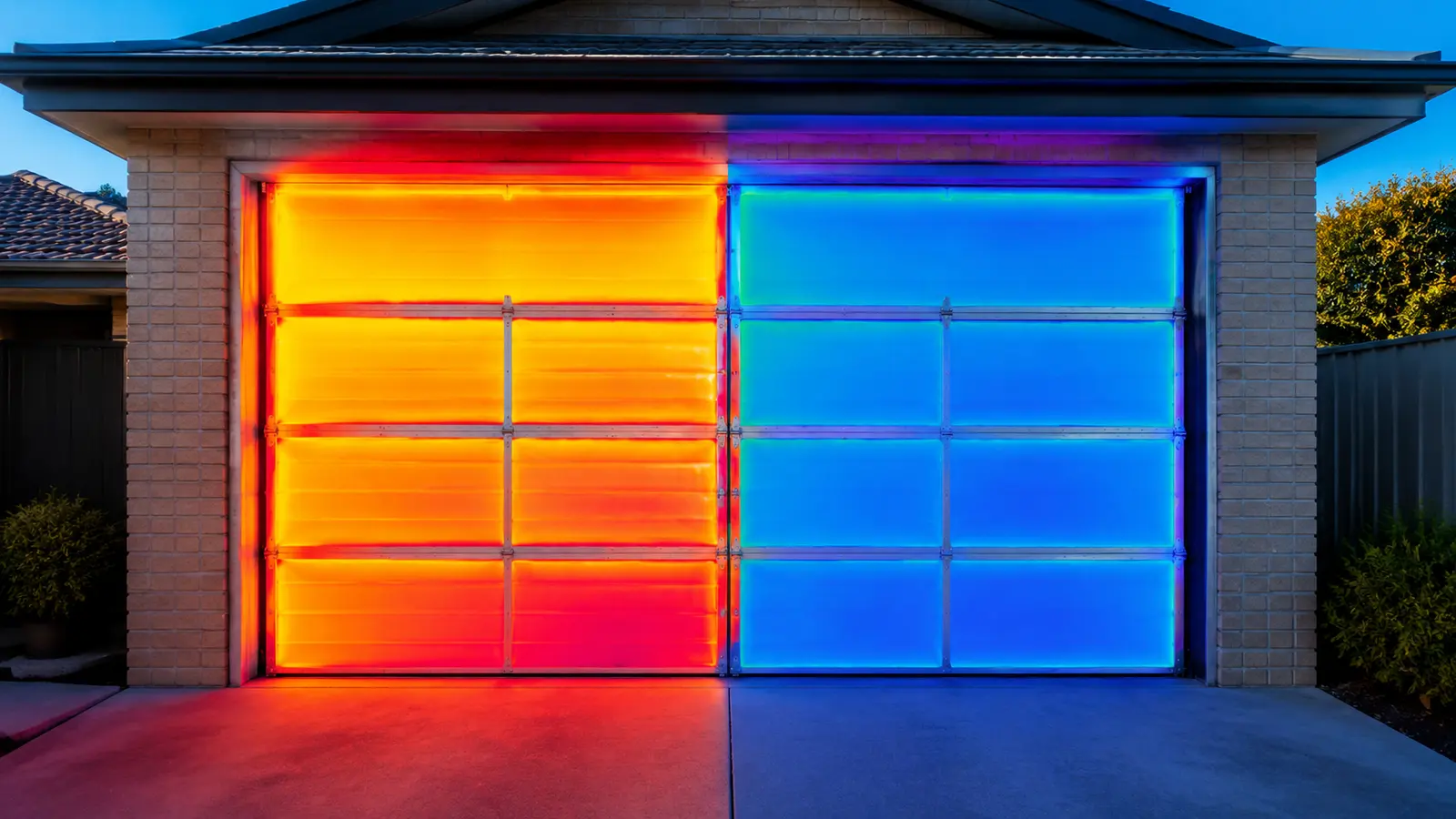
The thermal image tells the story. Same door, same day. One side baking, the other comfortable.
Turn the garage into a room you actually use
Most people do not insulate a garage door for the science. They do it to get a room back.
Once the heat and cold are under control, the garage stops being storage you avoid and starts being space you use. The most common plans we see:
- Home gym. Train before work or after dinner without it feeling like a sauna.
- Home office or studio. A quiet zone away from the kitchen table, comfortable enough to sit in all day.
- Kids’ or teen retreat. A play room, music room or hangout that is not in the middle of the house.
- Workshop. Build, fix and store without fighting the temperature.
- A better car space. Even if it stays a garage, a cooler, cleaner room is nicer to use every day.
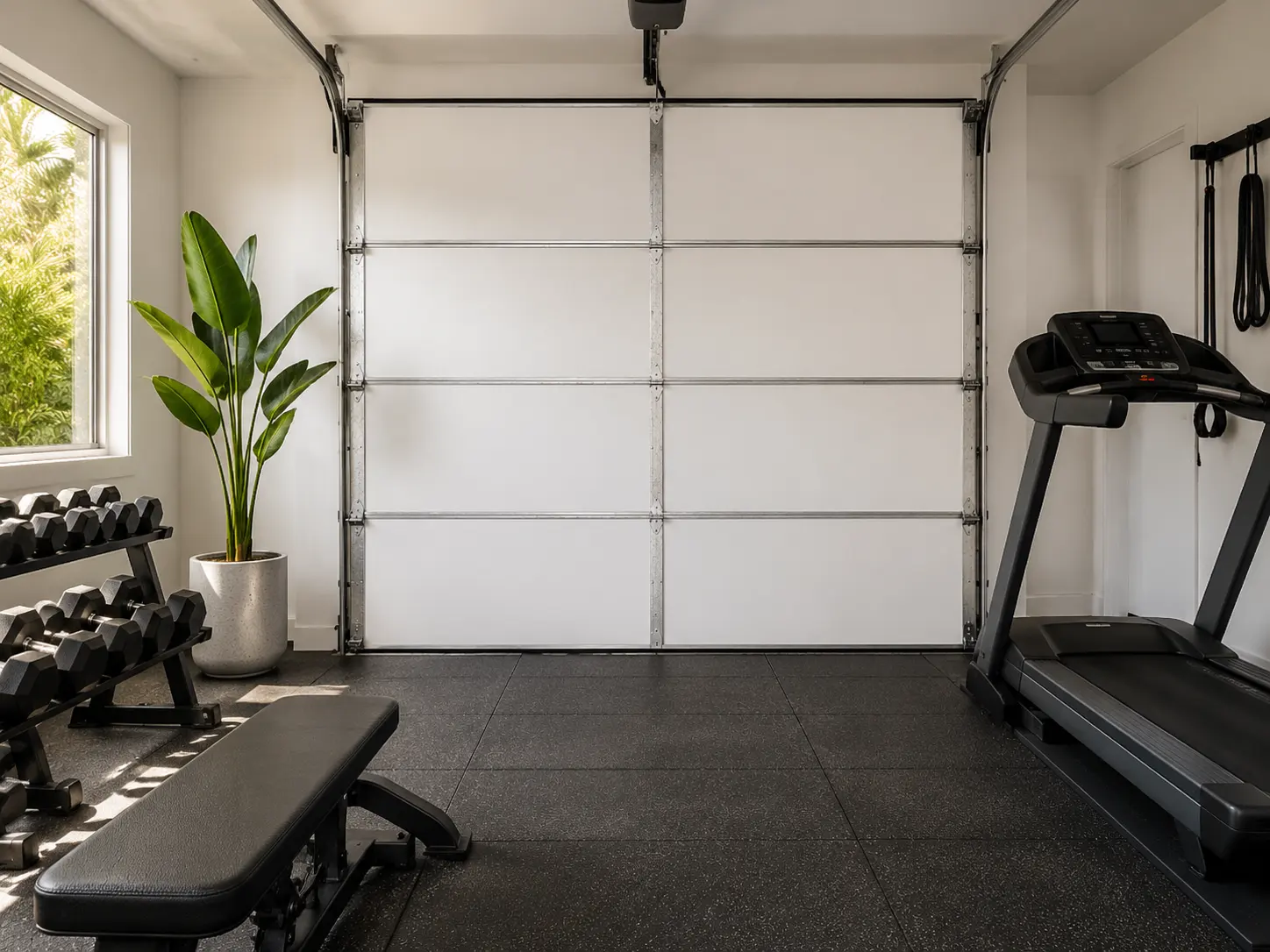
Compared with building an extension, insulating the door is a tiny spend for a usable room. You already have the four walls. You are just making them comfortable.
R-value, explained in plain terms
R-value measures how well a material resists heat moving through it. Higher number, more resistance, better insulation. That is all it means.
KoolDoor panels are rated R1.5. So the panel does real work to slow the summer heat coming off your door, not just cover it up. It performs both ways, keeping heat out in summer and holding warmth in through winter.
Plenty of rivals quote a vague “degrees” figure and no R-value at all. We give you both, so you can compare like for like before you buy.
What to look for in garage door insulation
Not all kits are equal. If you are comparing options, these are the things that decide whether you end up with a cooler garage or a sticky mess in two summers.
Fire-resistant material. Cheap kits use expanded polystyrene (the white bead foam from eskies and packaging). It is not made for a garage. KoolDoor uses rigid PIR foam, which is fire-resistant and far more suited to the job.
A real, stated R-value. A kit that only talks in “degrees cooler” and hides its R-value is hard to compare. Look for an honest number. Ours is R1.5.
Facing on both sides. A facing on both faces reflects radiant heat and protects the foam, so the panel keeps working and keeps looking neat.
A proper fit. Panels need to be cut to your door’s sections and sit flush. A loose, gappy job leaks at the edges and undoes the work.
Backed and built for here. A 10-year guarantee means someone stands behind the product, and you are buying something built for local conditions.
DIY or professional install: your call
Two ways to insulate your garage door. Both end with the same cooler room.
Fit it yourself
Order a DIY kit and we ship it anywhere in Australia. Most people have it on the door in about 2 to 3 hours. You need a tape measure, a straightedge and a knife. No glues, no chemicals, no tradie.
Measure the door, pick the kit that matches, then trim each panel to size as you go. The panels press into the door sections and stay put. If you can use a tape measure and a sharp knife, you can fit a kit. There is a step-by-step install video on each product page to follow along.
Shop DIY kits or check the how-to-measure guide first.
Get it done for you
Prefer it handled? Our installers measure, cut and fit on site in one visit. Install covers Sydney, Melbourne, Brisbane, Hobart and Adelaide. The Sydney team also looks after the Hawkesbury and Blue Mountains.
You get a fixed price up front, a tidy job, and the same 10-year guarantee. No mess left behind.
Roller door insulation
People ask if you can insulate a roller door, not the standard sectional kind. The honest answer depends on the door.
A sectional door (the type that folds up in panels) is the easy win. KoolDoor panels fit straight into each section. A solid tilt door works the same way.
A curtain-style roller door rolls up into a drum, so rigid panels can’t sit on the moving slats. The fix is often a seal kit around the frame to block the gaps where heat and draughts get in, rather than panelling the door itself.
Not sure which door you’ve got? Tell us your door type and we’ll point you to the right product before you spend a cent.
Browse insulated garage door options or read the garage door seals guide.
What you’ll pay
We show our prices up front. Most of this trade hides them.
| Kit | Suits | Price |
|---|---|---|
| Standard Single (8 panel) | A single garage door | $370 |
| Standard Double (16 panel) | A standard double door | $700 |
| Extra Large Double (20 panel) | A wider or taller double door | $880 |
| Garage Door Seals | Block draughts and pests around the door | from $260 |
Kits start at $370. All prices include GST, plus delivery, calculated at checkout.
Compare that with the cost of garage doors installed new, or with building an extension to get an extra room. A kit turns dead space into a usable one for a fraction of either, and you can do it this weekend.
Common questions
Does garage door insulation actually work?
Yes. A bare metal door heats up fast and pushes that heat into the room. KoolDoor panels keep the door up to 20°C cooler, so the garage stays usable through an Australian summer and warmer in winter. The thermal images above show the difference on a single door.
Is it worth the extra money?
If you want the garage back as a room, it is one of the cheapest ways to get there. A kit costs a fraction of an extension and turns space you already own into space you can use all year. Every kit also carries a 10-year guarantee.
What R-value do KoolDoor panels have?
R1.5. R-value measures how well the material resists heat passing through it. A higher number means better insulation, and R1.5 does genuine work to slow the heat off your door.
Should I fit it myself or get it installed?
Most people fit it themselves in about 2 to 3 hours with basic hand tools. If you’d rather not, our team installs in Sydney, Melbourne, Brisbane, Hobart and Adelaide. DIY kits ship anywhere in the country.
How long does it take to fit?
About 2 to 3 hours for a standard double door on your first go. A single door is quicker. No power tools, no glue, no previous experience needed.
Will it fit my door?
It fits most standard sectional and tilt doors. Measure your door, choose the matching panel count, and trim each panel as you go. Curtain-style roller doors usually call for a seal kit instead. Ask us if you’re unsure.
Is the material fire-safe?
KoolDoor panels are rigid PIR foam, which is fire-resistant. That is a different and safer class of material than the polystyrene bead foam used in budget kits.
How much does it cost?
DIY kits start at $370 for a single door and go to $880 for an extra-large double. Prices include GST, plus delivery worked out at checkout. Every insulation kit has a 10-year guarantee. Every kit has a 10-year guarantee.
Cooler garage, sorted
A cooler garage. A room you can use. Backed for 10 years.
Questions first? Call us on 0460 789 469 or email sales@kooldoor.com.au.
Get your garage sorted before the next heatwave
Shop a DIY kit shipped Australia-wide, or get a fixed-price install quote in 60 seconds.